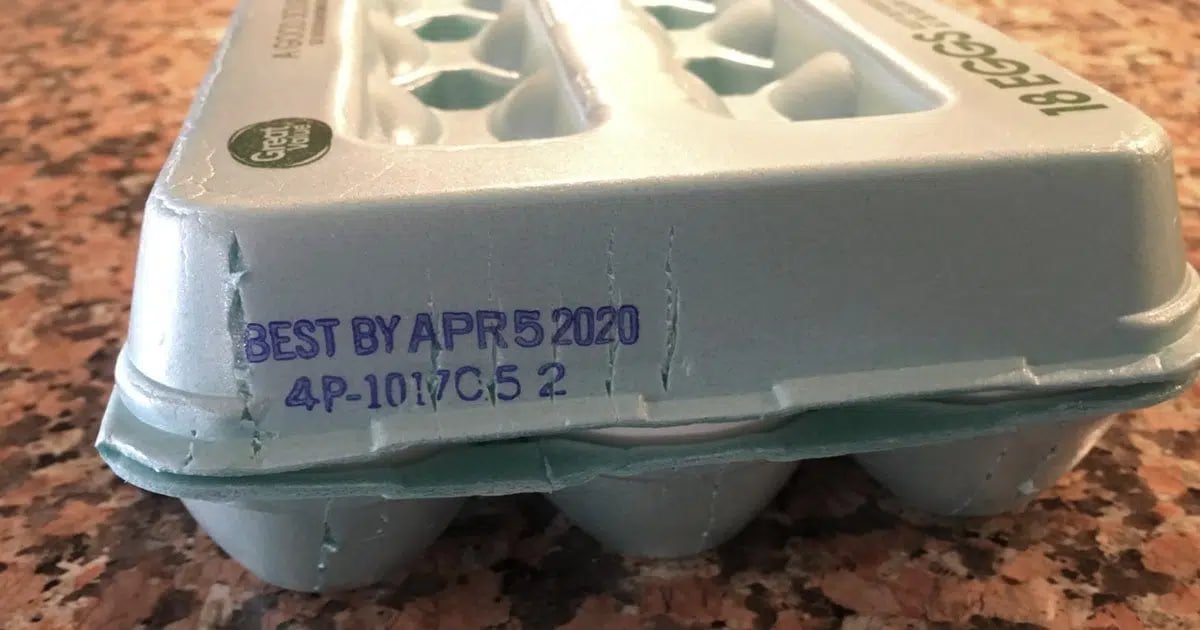
The Plant Code: AKA, Where the Heck Did These Eggs Come From?
Next to the Julian date, there’s this “P” code—like “P1021” or something. It’s the plant where the eggs were processed. Sounds useless, until you hear about a salmonella outbreak and realize you have no clue if your eggs are involved.
There was a recall once and I had eggs in the fridge. I checked the Julian date. Check. I checked the plant code. No match. Crisis averted. But I’ll never forget that 30 seconds of panic in front of the fridge, carton open, phone in hand, trying to decode government websites.

Eggs Don’t Last Forever. I Know—Shock.
Another thing I used to believe: if an egg floats in water, it’s bad. If it sinks, it’s good. That’s… sort of true? But also not a science I’d bet my omelet on.
What I do trust now is the packing date. I scribble it on the top of the carton like a little calendar. “Packed: Day 124. Toss after: Day 154.” I even add a sad face emoji on the expiration day. It’s dumb. It works.
Also—fun fact—if you keep eggs in the coldest part of the fridge (not the door!), they stay fresh longer. You’re welcome.
Those Fancy Labels Are Sometimes Just… Labels
Let’s detour for a sec. Ever seen “Cage-Free,” “Free-Range,” “Organic,” “Pastured,” and thought, “Wow, these chickens live better than me”? Same.
The truth? Cage-free often just means they aren’t in cages—but they’re still in giant barns. Free-range might mean outdoor access, but often it’s like, “a door opens once a day and the chicken stares at the light for two seconds.”
If you want eggs from chickens that actually roam around, look for “pastured.” I’ve bought those and the yolks are so orange, it’s like cracking open a tiny sun. They taste richer, too—maybe it’s mental, maybe not. But I’ll swear by them.