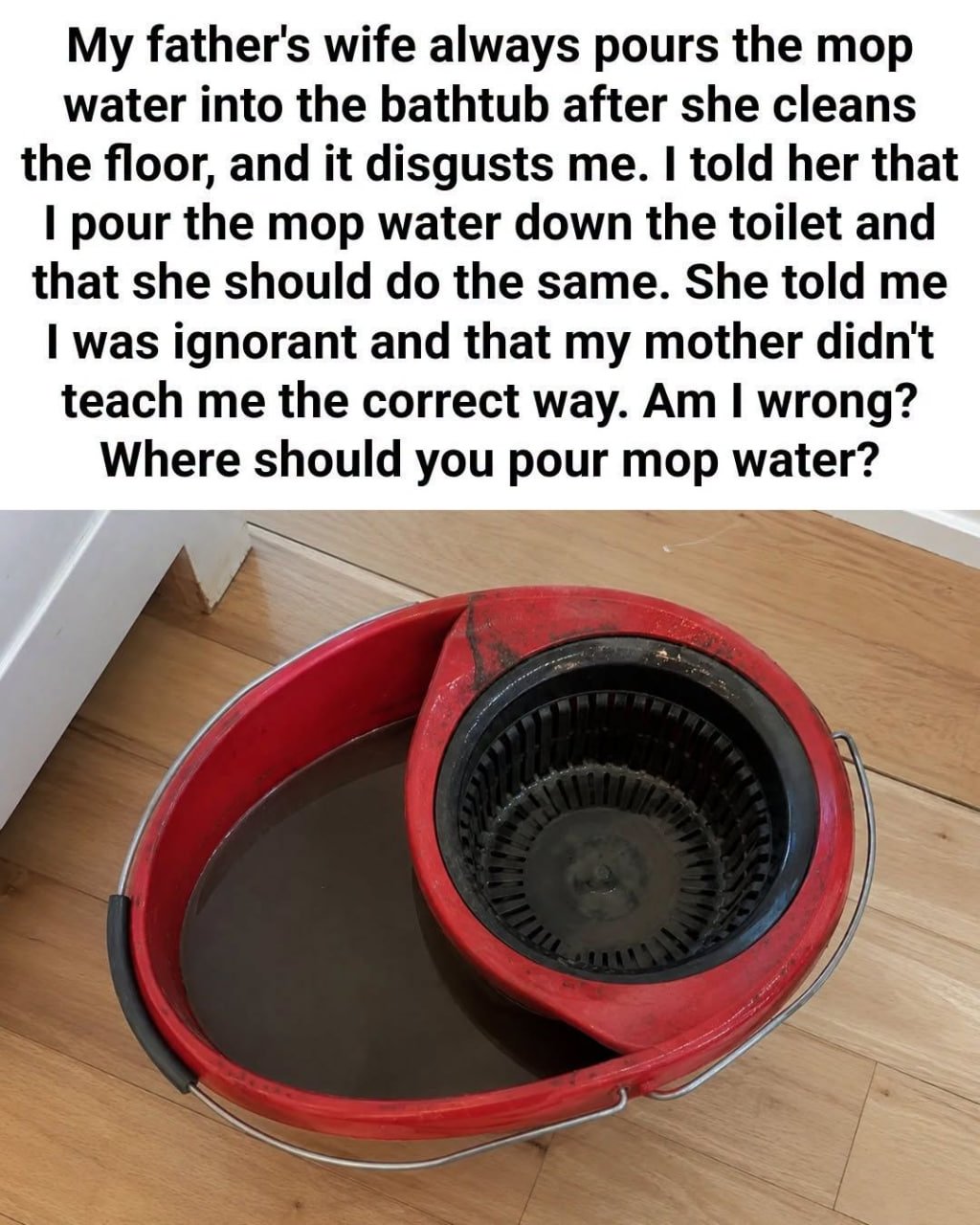
Dirty mop water should usually go in the toilet, not the bathtub, unless you have a utility sink, service sink, or floor drain made for cleaning water. The goal is simple: send the water into the sanitary sewer system while keeping grit, hair, chemicals, and grime away from drains that clog easily or touch places where people bathe.
I know this sounds like one of those tiny home questions you feel silly asking out loud. I have had the same pause with a full mop bucket in my hands, standing between the bathroom and the tub like I was choosing a life path. Toilet? Bathtub? Sink? Backyard? Suddenly a bucket of gray water feels oddly high stakes.
The short version: the toilet is the better everyday choice in most homes. The bathtub can work in a pinch if you are careful, but it is not my first pick.
Why Dirty Mop Water Usually Belongs in the Toilet
The toilet is generally the best place to dump dirty mop water at home because it connects to the sanitary sewer or septic system and is built to carry waste away. That is also why several cleaning and plumbing guides point people toward the toilet rather than a kitchen sink or bathtub drain.
Dirty mop water is not just water. It may contain soil, food crumbs, pet hair, bathroom dust, detergent, disinfectant, and whatever mystery grit was hiding under the edge of the fridge. A toilet handles suspended waste better than a narrow tub drain, and flushing sends the mess through the waste line quickly.
There is a hygiene reason too. If I pour mop water into a bathtub, I now have floor dirt sitting in the place where someone stands barefoot to get clean. Yes, you can rinse and disinfect the tub afterward. But that is extra work, and if I can avoid cleaning the thing I just dirtied while cleaning, I will. I am not above efficiency.
A toilet is also less fussy about splashes if you pour slowly and aim low. That said, you still need to wipe the rim, seat, base, and nearby floor if anything splatters. Mop water can leave a weird dusty ring if it dries. Ask me how I noticed that. Actually, do not. It was during one of those rushed Sunday resets where I was trying to clean the kitchen, answer a text, and pretend dinner was going to cook itself.
Toilet vs Bathtub for Mop Water
If you are choosing between only those two, use the toilet. If you have a utility sink or a laundry sink, that is even better, especially for bigger buckets or dirty jobs.
Can You Pour Your Mop Water Down the toilet?
Yes, you can pour mop water down the toilet in most homes, as long as you do it carefully and the bucket does not contain debris that could clog the line. Plumbing advice on this topic usually gives the same warning: water is fine, but solids are the problem.
Before dumping, look in the bucket. If there are clumps of hair, leaves, broken glass, food bits, paper, or thick mud, do not send all of that into the toilet. Scoop or strain the solids into the trash first. I keep an old paper towel nearby when I mop bathrooms because hair loves to gather in the bucket like it pays rent there.

A Safe Toilet Method Looks Like This:
1. Lift the seat and pour slowly into the bowl, not from shoulder height like you are emptying a cauldron.
2. Stop if the water level rises in a strange way.
3. Flush once the bucket is empty enough, or flush in batches for a large bucket.
4. Rinse the bucket with clean water and pour that into the toilet too.
5. Wipe any splashes on the toilet, baseboards, and floor.
If you use a septic system, be more careful with cleaning products. Small amounts of mild floor cleaner are usually less concerning than dumping a bucket loaded with bleach, ammonia, solvent-based cleaner, or disinfectant concentrate. Follow the product label, use the right dilution, and do not mix cleaners. Bleach and ammonia together can create toxic gas, and no clean floor is worth that circus.