Can You Pour Mop Water In The Bathtub
You can pour mop water in the bathtub if the water is lightly dirty, the drain is clear, and you rinse and clean the tub afterward. But the bathtub is usually the second choice, not the best place to dump mop water.
The tub drain is smaller and easier to clog with hair, grit, and sticky residue. It already deals with soap scum and body oils, which are annoying enough without adding floor dirt. If your mop water has sand, pet hair, or crumbs in it, the bathtub drain is a poor target.
There is also the plain gross factor. People bathe in the tub. Kids sit in it. Someone may wash a dog there. Pouring mop water into that space means you need to rinse the sides, clean the drain area, and disinfect the tub floor before anyone uses it again. That is not hard, but it is easy to skip when you are tired.
If you must use the bathtub, use a drain strainer if you have one, pour slowly near the drain, rinse with hot water, and clean the tub surface afterward. Do not dump thick sludge into the tub and hope water pressure will forgive you. Plumbing has a memory, and it is petty.
The Best Place To Dump Mop Water If You Have One
The best place is a utility sink, service sink, mop sink, or floor drain connected to the sanitary sewer system. This is common in commercial cleaning because those fixtures are made for dirty cleaning water and awkward buckets.
A service sink sits lower than a normal sink, so you are not hoisting a sloshing bucket up to counter height. A floor drain is handy in janitor closets or laundry areas. These spots are easier to rinse, less connected to food or bathing, and better suited to dirt.
At home, a laundry sink is wonderful for this. If you have one, use it. I still would not dump rocks, wet leaves, or heavy mud into it, because any drain can clog if you treat it like a trash chute. But for ordinary floor water, a utility sink beats the toilet and bathtub for convenience.
Where Not To Dump Dirty Mop Water
Do not dump dirty mop water into a storm drain, street gutter, garden bed, or yard if it contains cleaners or disinfectants. Storm drains may lead to local waterways without the same treatment as household wastewater, and outdoor dumping can leave chemicals and grime where they do not belong.
The kitchen sink is also a bad habit. It may connect to the same sewer system, but it is a food-prep area with a drain that is not meant for gritty floor waste. If the mop water contains grease from a kitchen floor, that is even worse. Grease plus dirt can cling inside pipes and build up over time.
Bathroom sinks are not great either. They are small, splashy, and easy to clog with hair and grit. If you have ever had to pull gray sludge from a sink stopper, you know that lesson sticks around in your soul a little.

Cleaner Etiquette For Homes, Rentals, And Hired Cleaners
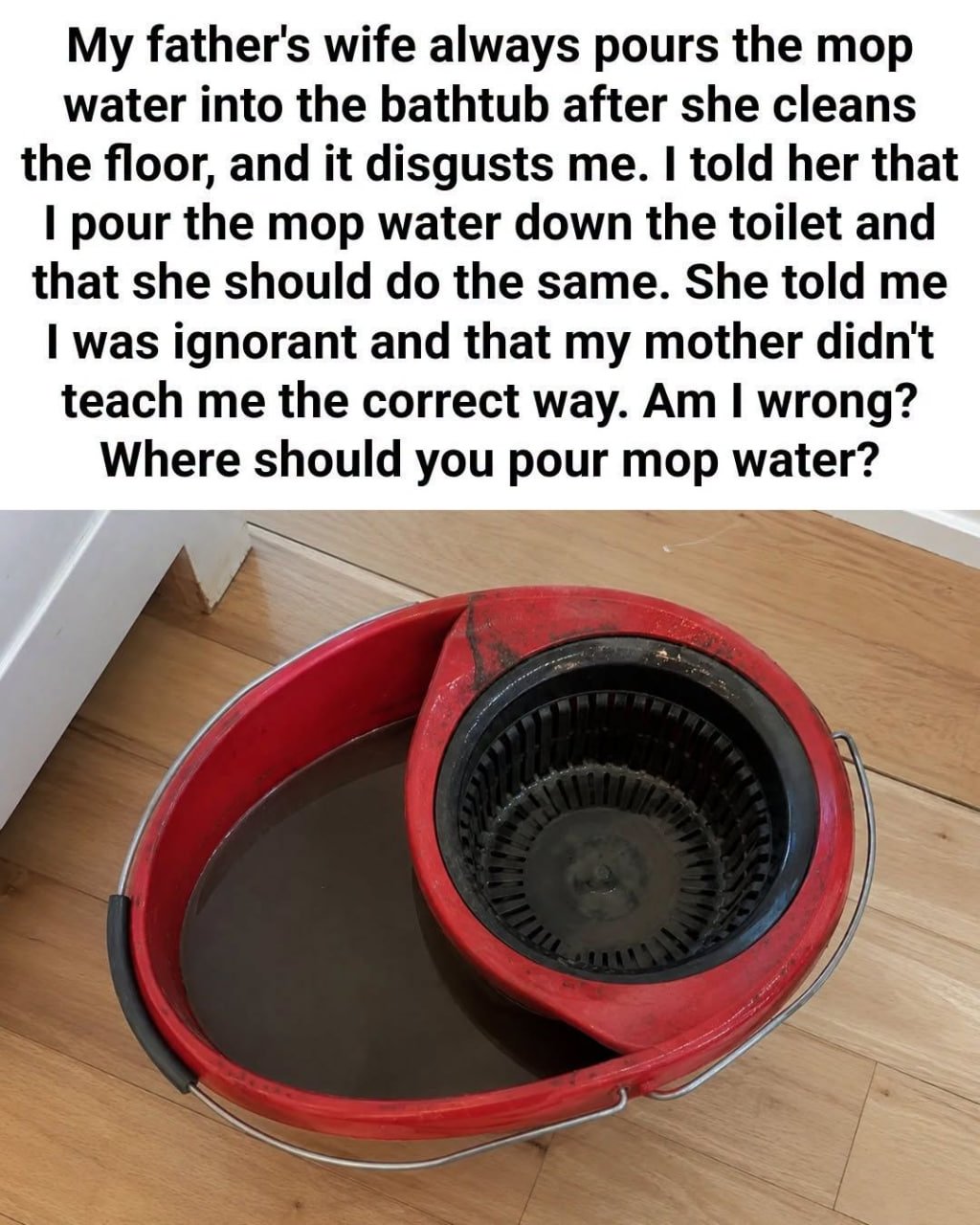
This is where people get weirdly emotional, and I say that with affection. Some folks think toilet dumping is nasty. Others think bathtub dumping is worse. A lot of the online chatter around mop water is really about etiquette, not plumbing
If you are cleaning someone else’s home, ask where they prefer dirty water to go. A simple question solves it: Do you want mop water emptied in the toilet, utility sink, or somewhere else? That phrasing keeps it practical and avoids making anyone feel judged.
If you hire a cleaner, tell them your preference before the first cleaning. If you have old plumbing, a septic system, a slow tub drain, or a utility sink in the basement, say so. Good cleaners are not mind readers, and homeowners sometimes forget that their house quirks are not obvious. The toilet that needs a gentle handle jiggle is not standard operating knowledge.
For shared apartments, the same rule applies. Agree on one disposal spot and clean it afterward. If the toilet is the shared method, wipe splashes. If the tub is the only practical option, rinse and disinfect it right away. Nobody wants to discover floor grime during a shower.
A Practical Rule I Actually Follow
My rule is: utility sink first, toilet second, bathtub only if the water is light and I am willing to clean the tub right then. I never use the kitchen sink, and I do not dump mop water outside if there is cleaner in it.
Before I pour, I check for solids. After I pour, I rinse the bucket and wipe the disposal area. That tiny extra minute prevents smells, residue, and awkward little gray specks around the toilet base.
So if you are standing there with a bucket, choosing between the bathtub and the toilet, choose the toilet. Pour slowly, flush, wipe the splashes, and leave the tub for actual bathing, not the remains of whatever was living under the dining table chair legs.