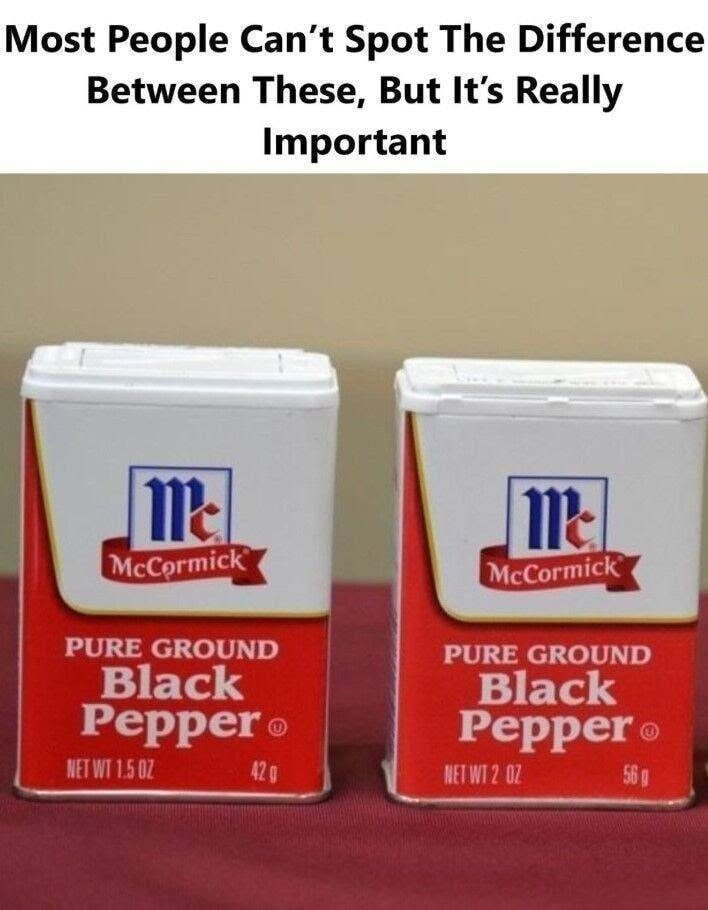
At first glance, it is just a pepper tin sitting quietly on a kitchen shelf. It looks familiar, dependable, and unchanged. But a closer look reveals a growing debate about transparency, trust, and honesty in modern food packaging.
What began as a small change in the spice aisle has sparked a larger conversation about how companies communicate value to consumers—and whether what looks the same is truly the same.
At the center of this debate are two companies: McCormick & Co., one of the largest spice manufacturers in the world, and Watkins Inc., a smaller heritage brand with more than 150 years of history. The issue is not flavor or quality. It is about how much consumers are actually getting and how clearly that information is presented.
What Changed—and Why It Matters
For years, McCormick sold popular products like its Peppercorn Medley and ground pepper blends in round, opaque tins containing 8 ounces of spice. The packaging became a familiar fixture in American kitchens.
Recently, however, consumers noticed a subtle shift. The tins looked the same, but the net weight had dropped from 8 ounces to 6 ounces—a 25 percent reduction in product. The price, meanwhile, remained largely unchanged.
McCormick did not remove the weight information. The new net weight is printed clearly on the label. But because the container is opaque and unchanged in size, the reduction is not obvious unless shoppers carefully read the fine print or compare old and new tins side by side.
This practice has a name: shrinkflation.
Understanding Shrinkflation
Shrinkflation occurs when companies reduce the amount of product in a package while keeping the price the same or raising it slightly. It is a way to offset rising production costs without increasing the sticker price.
From a legal standpoint, shrinkflation is allowed as long as the correct weight is disclosed. From a consumer trust standpoint, however, it can feel misleading—especially when packaging remains visually identical.
In grocery aisles filled with familiar brands, consumers often rely on size and appearance to judge value. When those visual cues no longer match reality, trust can erode.