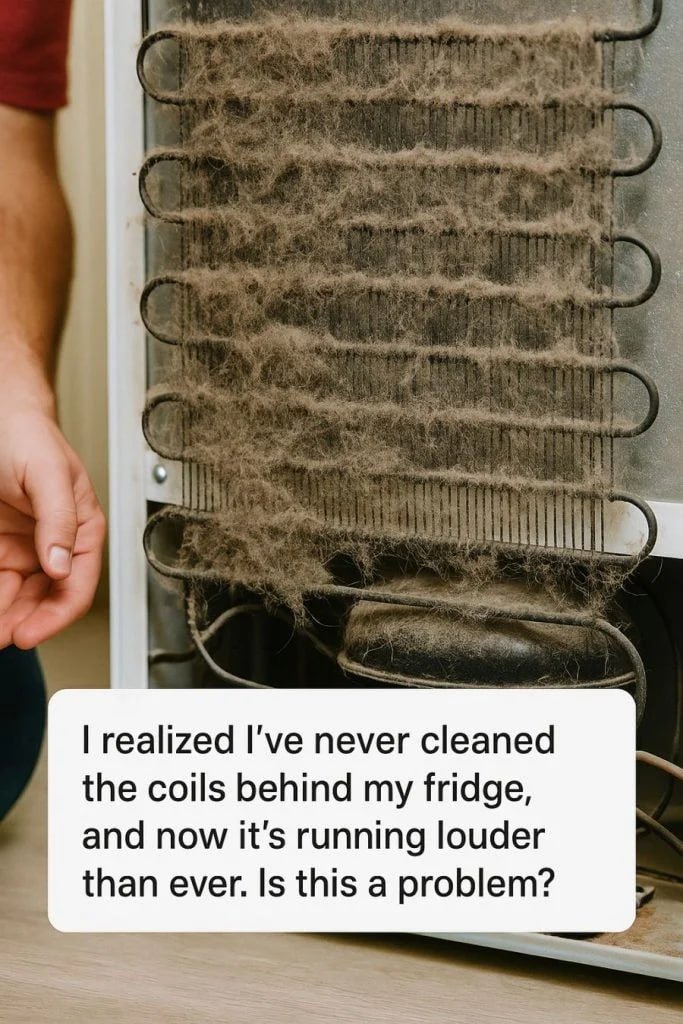
Many of us take the quiet hum of our refrigerator for granted, assuming that as long as it keeps our food cold, everything is working as it should. However, when that quiet hum turns into an unexpected rumble, it can be both alarming and disturbing. This change in noise level often leads homeowners to wonder if there’s something wrong with their appliance, especially if it’s been a while since their last service.
One of the most common – and easily overlooked – maintenance tasks is cleaning the condenser coils located behind the refrigerator. These coils play a crucial role in the appliance’s cooling system, and neglecting them can lead to a variety of problems. In this article, we’ll explore why your refrigerator might be making more noise than usual, how dirty coils could be contributing to the problem, and what you can do to fix it.
Sudden Rumbling: When a Quiet Refrigerator Starts to Make Noise
A sudden loud noise in your refrigerator is often a sign that something isn’t working as efficiently as it should. Normally, your refrigerator makes a low humming noise as it turns on and off to keep the internal temperature consistent. When this noise gets significantly louder, it could indicate that the compressor or fans are working harder than necessary.
This extra effort can be measured in decibels (dB). A typical refrigerator operates at a noise level of around 32 to 47 dB, but in case of problems, it can exceed 55 dB, which is a much louder sound. This increased noise level is often associated with other performance issues, such as uneven cooling or increased energy consumption.
How Your Refrigerator Really Cools Your Food
To understand why your refrigerator is making more noise, it’s helpful to know how it cools your food. The refrigeration cycle involves a refrigerant that circulates through the system, absorbing heat from inside and releasing it outside. This process is driven by a compressor that pumps refrigerant through coils.
The evaporator coils inside your refrigerator absorb heat, while the condenser coils outside (often at the back or bottom) release it. If these coils are clogged with dust or dirt, the heat exchange process becomes less efficient, causing the compressor to work harder and make more noise.
What Condenser Coils Do – and Why Dust Is Their Enemy
Condenser coils are designed to release the heat absorbed from inside your refrigerator to the outside air. This is a critical part of the refrigeration cycle, as efficient heat removal ensures that the compressor doesn’t overload itself.
Dirt and dust act as insulators on these coils, trapping heat and preventing it from being released efficiently. This forces the compressor to run longer and harder to maintain the desired temperature inside the refrigerator, resulting in increased noise, higher energy consumption, and possibly even a shortened lifespan.
Can dirty coils really make your refrigerator louder?
Absolutely. When the condenser coils are clogged with dirt and debris, the refrigerator compressor compensates by working overtime. This increased workload can lead to a louder operation. The noise is often caused by the compressor starting more often or by it not being able to maintain the set temperature.
Additionally, the fans responsible for dissipating heat may become louder as they work harder to push air through the dusty coils. The combination of these factors results in a significant increase in noise levels.
Other Warning Signs That Coils Are Clogged
In addition to increased noise, there are several other warning signs that your refrigerator’s condenser coils may be clogged. One common symptom is that the refrigerator feels warmer than usual because the cooling process becomes less efficient. You may also notice that the refrigerator is turning on and off more frequently as it struggles to maintain the desired temperature.
Another sign is your energy bills going up, as a refrigerator with clogged coils will use more electricity. Additionally, placing your hand near the coils and feeling excessive heat can be a clear sign that they are not working properly.
Is this a safety risk or just an annoyance?
While a noisy refrigerator can be annoying, it is usually not a direct safety risk. However, if the underlying causes of the noise are not addressed, they can lead to more serious problems. For example, an overloaded compressor can eventually break down, leading to expensive repairs or the need for a new unit.
In rare cases, excessive heat buildup on dirty coils can pose a fire hazard if it causes electrical components to overheat. Regular maintenance, including cleaning the coils, is essential to prevent such risks.
How Much Extra Energy Do Dust-Clogged Condenser Coils Waste
Dirty condenser coils can significantly impact the energy efficiency of a refrigerator. Studies have shown that clogged
I realized I've never cleaned the coils behind my refrigerator and now it's running louder than ever. Is this the problem?