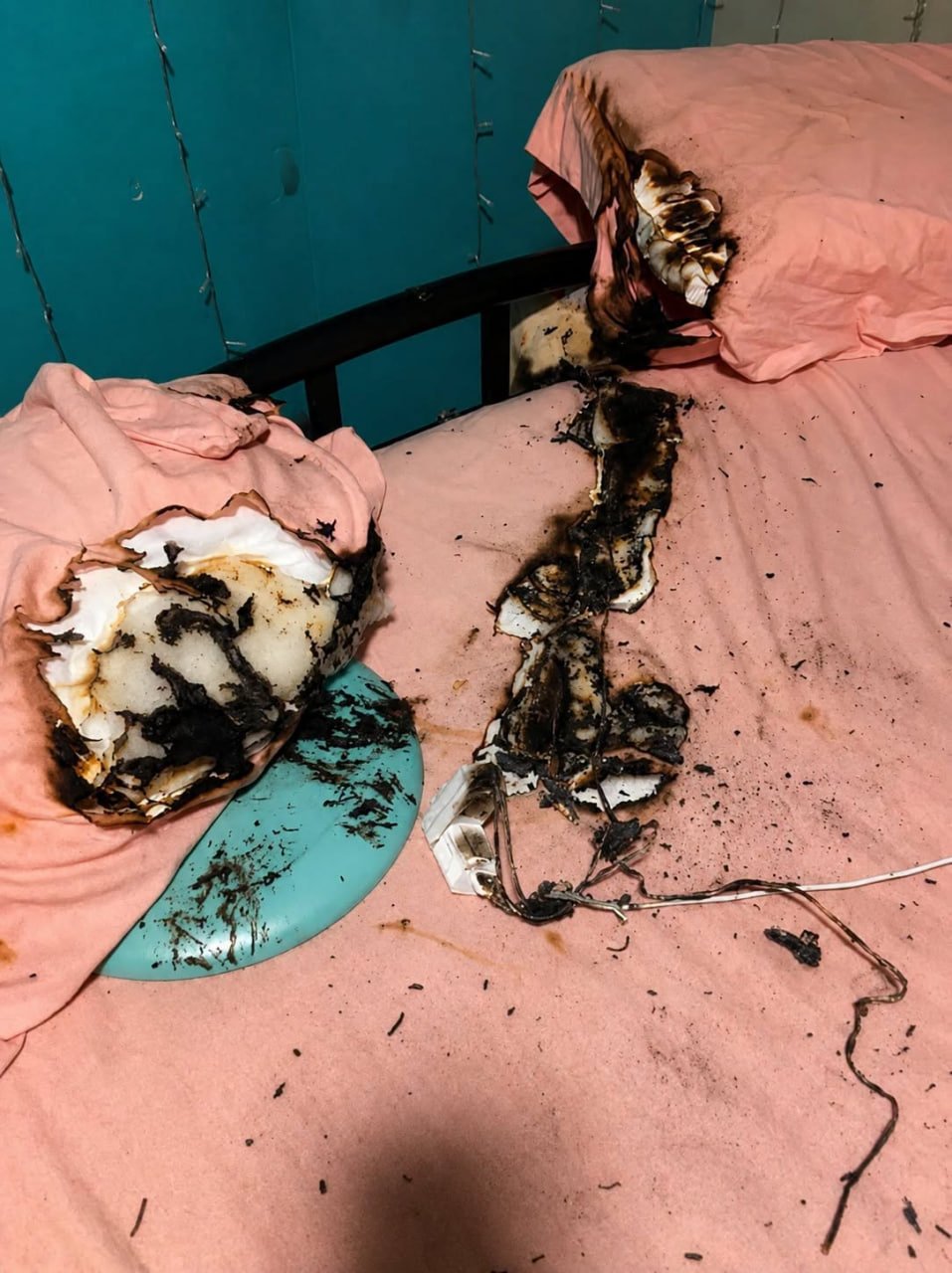
Most of us rely on our phones throughout the day. We use them to communicate, work, learn, and stay informed. Naturally, many people plug their devices in before going to bed so they are fully charged by morning.
However, where you charge your phone at night may be more important than you realize.
Many people place their phones on the bed, under a pillow, or beneath blankets while charging. Although this may seem harmless, firefighters and safety experts continue to warn that these habits can create a serious fire risk.
A widely shared message from the Newton Fire Department in New Hampshire highlighted the dangers associated with charging phones in bed. Their warning serves as an important reminder that small changes in our daily habits can significantly improve household safety.
Why This Warning Matters
According to information shared by the department, approximately 53% of children and teenagers charge their phones or tablets on their beds or under their pillows.
This statistic is concerning because soft surfaces trap heat generated during charging. When heat cannot dissipate properly, the risk of overheating increases.
Several factors contribute to the danger:
- Chargers and batteries naturally generate heat while charging.
- Pillows, blankets, and mattresses restrict airflow.
- Bedding and fabrics are highly flammable.
- Problems may go unnoticed while people are asleep.
Most modern devices use lithium-ion batteries. These batteries are generally safe when used correctly, but they can overheat, fail, or catch fire if damaged, defective, or exposed to excessive heat.
How Phone Charging Can Become Dangerous
When a phone charges, electrical current flows into the battery and chemical reactions store energy. Heat is a normal byproduct of this process.
Under normal conditions:
- The charger supplies power to the device.
- The battery stores energy.
- Heat dissipates into the surrounding air.
- Charging slows or stops when the battery is full.
Problems occur when a phone is placed on soft materials such as pillows, blankets, or mattresses.
These materials act as insulation and prevent heat from escaping. As temperatures rise, the battery and charger can become hotter than intended.
In rare cases, excessive heat may trigger a phenomenon known as thermal runaway, where a battery experiences an uncontrollable increase in temperature. This can result in smoke, fire, or even explosion.
While such incidents remain uncommon, overheating electronics cause thousands of reported safety incidents each year.