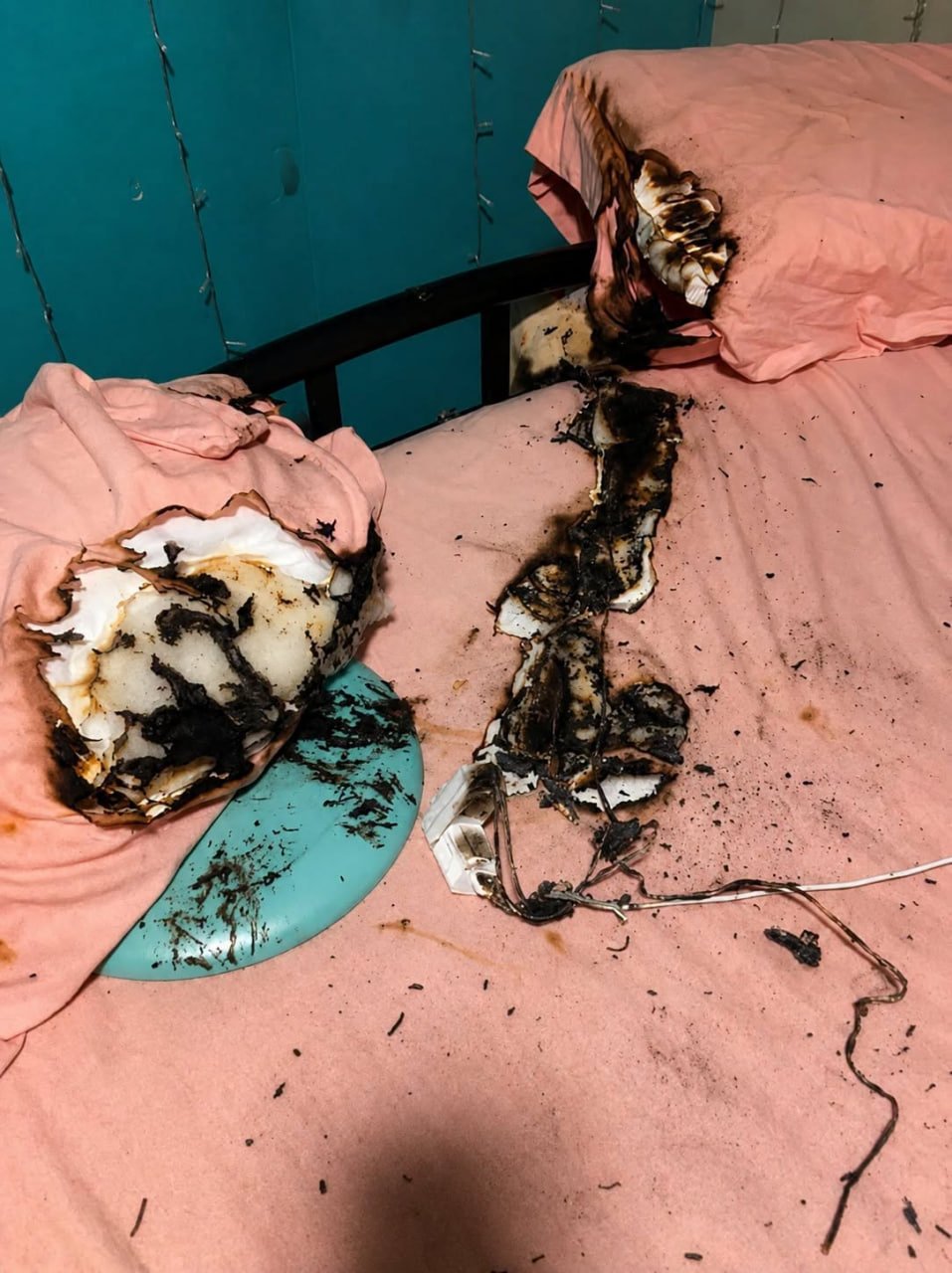
Warning Signs You Should Never Ignore
Pay attention to these common signs of battery or charger problems:
Excessive Heat
A charger should feel warm during operation, but it should never become painfully hot to touch.
Battery Swelling
A swollen battery often causes a phone case to bulge or the screen to separate from the frame. Stop using the device immediately if this occurs.
Damaged Charging Cables
Frayed wires, cracked insulation, or exposed metal can create sparks and short circuits.
Burning Smells
A chemical, burning plastic, or electrical odor can indicate overheating components.
Charging Problems
Devices that charge unusually slowly or lose power quickly may have battery issues that require inspection.
Sparks, Smoke, or Buzzing Sounds
Disconnect power immediately and discontinue use of the charger.
If smoke or fire is present, evacuate the area and contact emergency services. Never use water on an electrical fire.
Safe Charging Practices
Fortunately, reducing risk is simple.
Charge on Hard Surfaces
Always place phones and tablets on hard, non-flammable surfaces such as desks, countertops, or nightstands.
Keep Devices Away From Bedding
Maintain adequate space between charging devices and pillows, blankets, curtains, or clothing.
Never Charge Under a Pillow
This is one of the most dangerous charging habits because it traps heat completely.
Use Approved Chargers
Choose manufacturer-approved or certified charging equipment whenever possible.
Replace Damaged Accessories
Discard chargers and cables that show signs of wear.
Avoid Covering Devices
Do not place clothing, blankets, or other objects over a charging device.
Charge Earlier in the Evening
When practical, charge devices before bedtime rather than leaving them charging throughout the night.
Important Advice for Parents
Children and teenagers often use phones late into the evening and may not understand the risks associated with improper charging.
Parents can help by:
- Explaining why charging on a bed is dangerous.
- Creating a dedicated family charging station.
- Checking devices regularly for damage.
- Modeling safe charging behavior.
- Establishing household charging rules.
Education is often the most effective safety tool.
Safety Tips for Other Devices
The same precautions apply to many everyday electronics.
Tablets
Larger batteries can generate more heat and should always be charged on hard surfaces.
Laptops
Keep ventilation openings clear and avoid charging on beds or couches.
Power Banks
Store and charge them in cool, dry locations.
Smartwatches and E-Readers
Although these devices contain smaller batteries, proper charging practices remain important.
Additional Home Electrical Safety Recommendations
Phone charging safety is only one part of protecting your home.
Consider these additional precautions:
- Install smoke alarms on every level of your home.
- Test smoke alarms monthly.
- Avoid overloading outlets.
- Use surge protectors for valuable electronics.
- Keep flammable materials away from heat sources.
- Unplug unnecessary devices when not in use.
- Have older electrical systems inspected by a qualified electrician.
Fire departments also recommend creating a family fire escape plan and practicing it regularly.