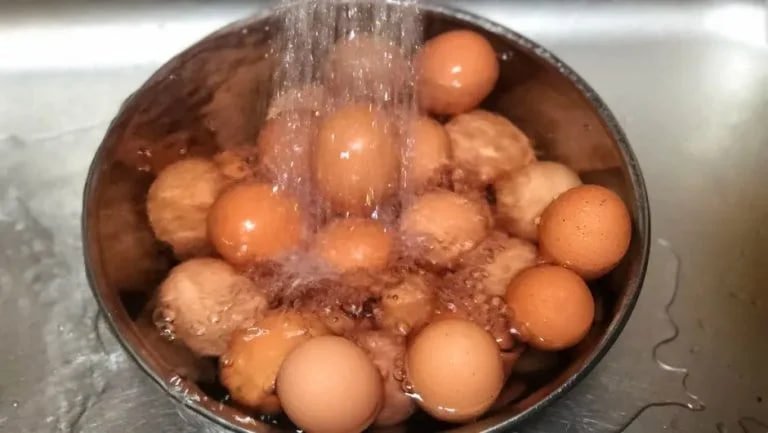
Do you know what to add to the water in which Easter eggs are boiled so that their shells do not crack and they are easy to peel?
When is the best time to boil Easter eggs?
The biggest holiday in the Orthodox calendar – Easter – is just a few days away. During this time, housewives are busy with preparations. The Easter table is full of red eggs, lamb and delicious kozunak. However, many people do not know when Easter eggs turn red and what to add to the water in which they are boiled! This way they do not crack and peel more easily.
Red eggs are indispensable on the traditional Easter table. Traditionally, the eggs are “knocked together” and the Christian greeting is pronounced: “Christ is risen from the dead!”, “Truly he is risen from the dead!”.
Today, housewives are feverishly preparing for the Easter table. Red eggs, lamb's feet and kozunak are essential, but the biggest challenge is painting the eggs. It is believed that the colored eggs of this Christian holiday never spoil.
“The egg synthesizes the mystery of creation; the universe, the world and thus man must have been born from the egg. The cosmic egg must be accepted as the foundation of the faith of all the peoples of the world.”
Maundy Thursday, the day of dyeing eggs
Usually on Maundy Thursday, also called Holy Thursday, homeowners dye eggs red or any other color of their choice. Red is the most commonly used color because it represents the blood of Jesus Christ, who was crucified for the salvation of mankind.
It is said that eggs painted on Maundy Thursday bring suffering and hardship to everyone, and their shells should be buried in the soil of the pasture. In this way, it protects livestock from evil and misfortune. Eggs are also painted in honor of the Ascension of the Lord, which occurs 40 days after Jesus' resurrection. This is the last day of the year when red eggs are painted and distributed!
What should you add to the water used to boil eggs?