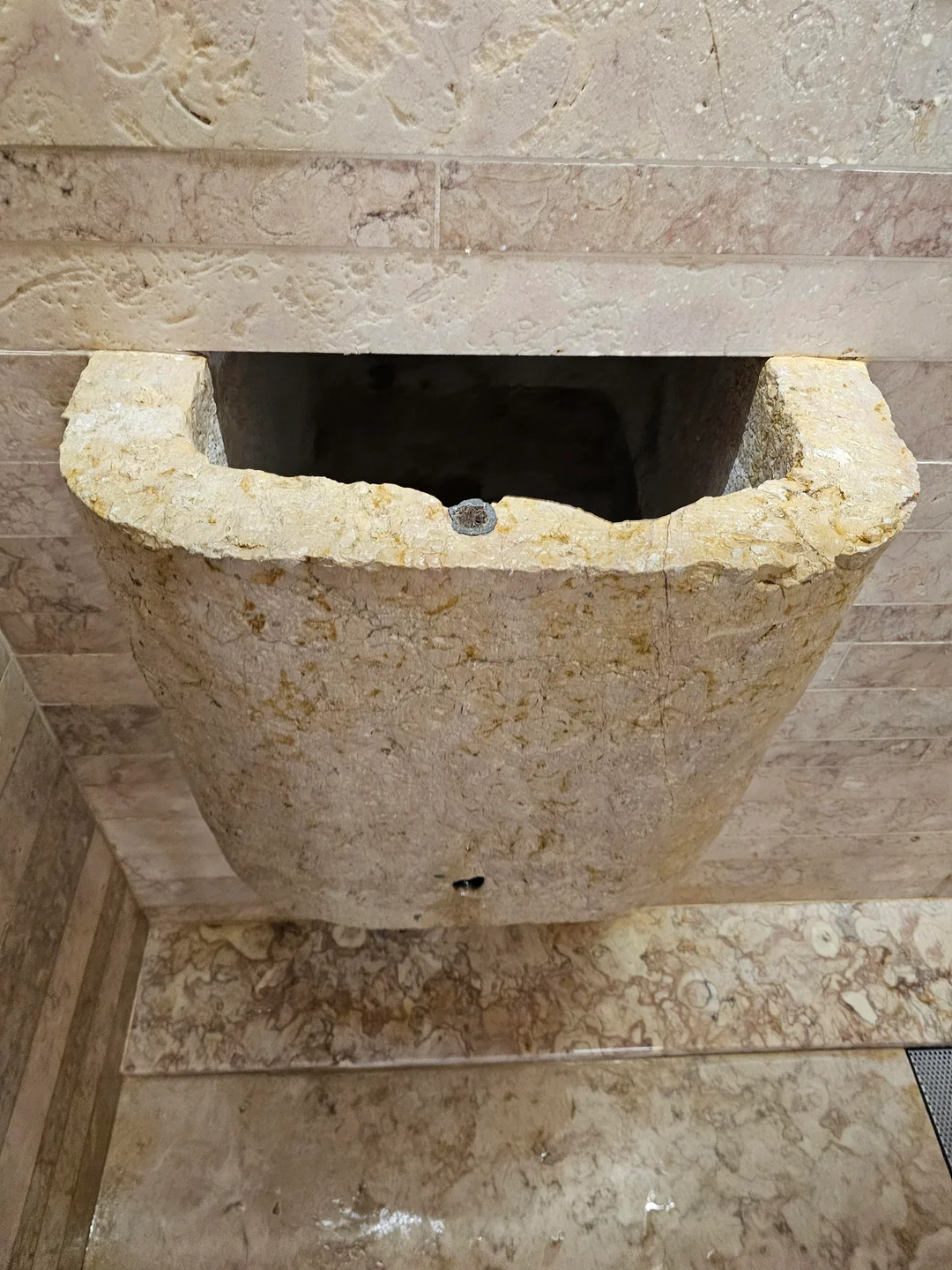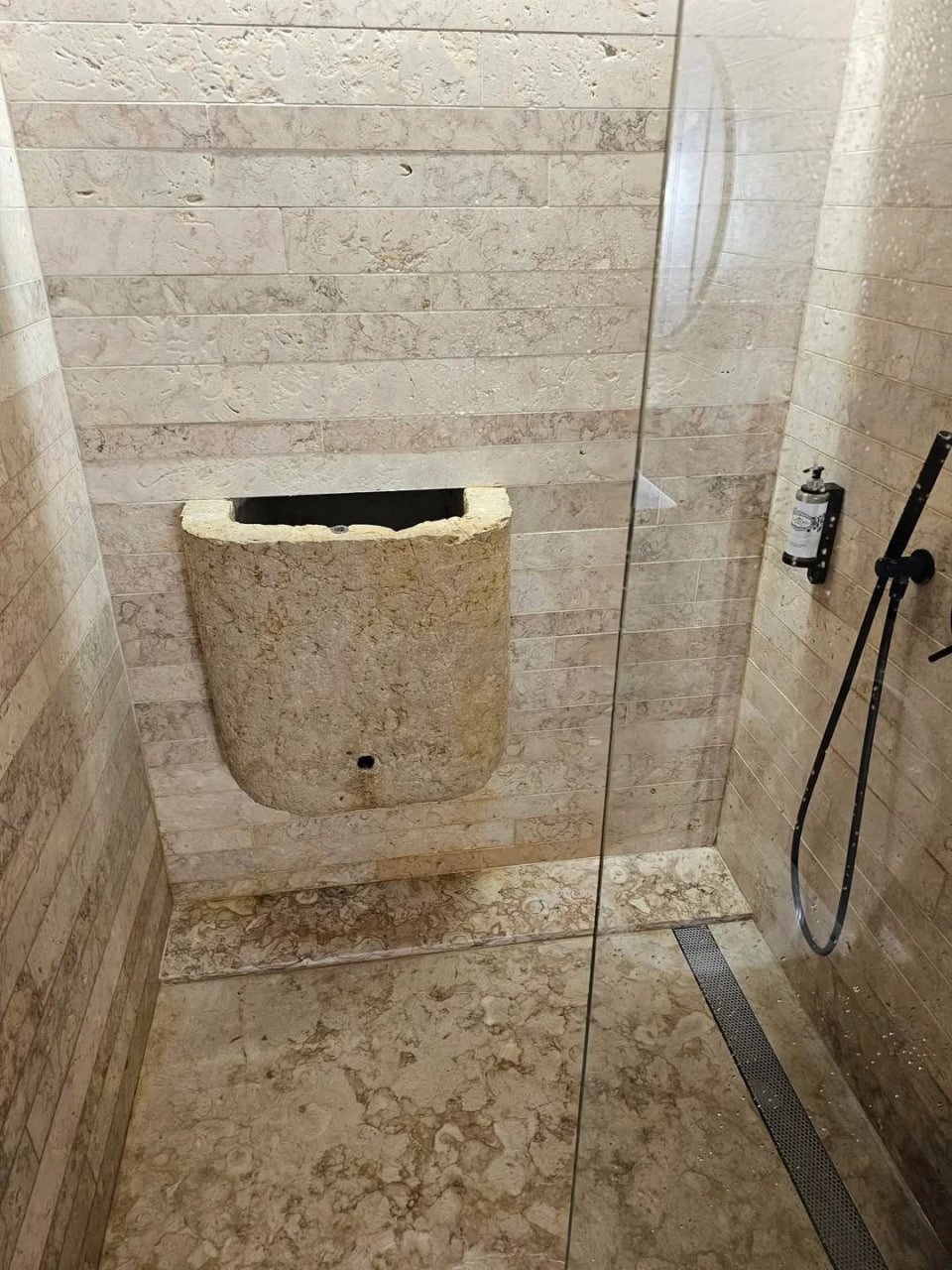
Upon initial inspection, it appears to be some sort of odd, antique stone bowl installed into the wall of a modern apartment’s shower. Although the tile, glass and black fixture surrounds are clean and sleek, it is obvious that it has roots in the past.
Most likely, this is an old Portuguese stone pia. A traditional wash basin carved out of a solid piece of limestone. Traditionally found in the kitchens, courtyards, workshops, monasteries, service rooms and other locations throughout portugal, these basins were used by individuals to rinse their hands, clean produce, wash tools, etc., as well as complete their regular household duties.
What did an old Portuguese stone pia serve to accomplish?
A Portuguese stone pia was created to be functional. It wasn’t designed for aesthetics. It was designed to endure.
Many pias featured wide walls with irregular rim edges and simply bored drain holes. Each pia reflected years of wear and tear on its surface. That same hand-made appearance exists with the stone pia in the picture. The rough exterior and chipped edge along with its heavy build suggests it once performed an actual function prior to the construction of the surrounding bathroom.
Prior to modern plumbing being available in nearly all rooms within a home, households utilized water much differently. This type of basin may have been located in a courtyard or kitchen where residents would bathe, clean and prepare meals. It represented a significant part of their day-to-day routine.