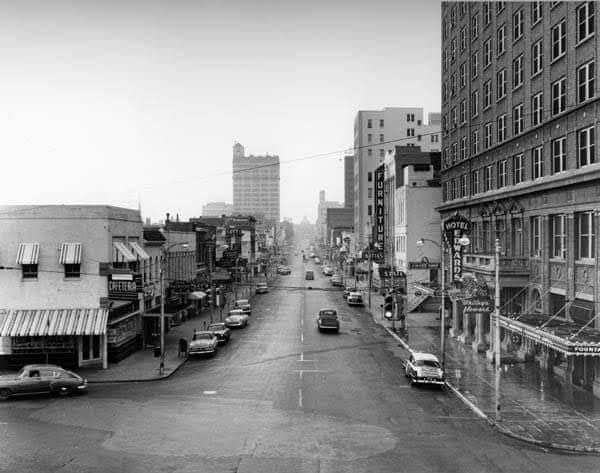
The intersection of Mill Street and West Capitol Street is one of the most historically significant crossroads in Jackson, Mississippi. For over a century, this area served as the bustling gateway to the city, bridging the gap between Jackson's major transportation hub (the railroad) and its political and commercial center.
Here is a breakdown of the history captured in this mid-century view:
1. The Gateway to Jackson (The Railroad Connection)
Mill Street runs directly alongside the railroad tracks where Union Station sits. Because of this, the intersection of Mill and Capitol was the very first thing visitors saw when they stepped off the train in Jackson.
-
In the late 19th and early 20th centuries, this corridor transformed from a muddy road into a dense, urban commercial hub.
-
In the 1920s, the train tracks were elevated, and the Mill Street Viaduct was built, altering the landscape but keeping the area highly active.
2. The Hotel Edwards (Visible on the Right)
The large building dominating the right side of the photo is the Hotel Edwards (later renamed the King Edward Hotel). This site holds massive historical weight:
-
Civil War Roots: The original hotel on this spot was called the Confederate House, which was burned down by Union troops during the Civil War.
-
The Political Hub: Rebuilt in 1868 by Major R.O. Edwards and his sons, the "Edwards House" became the unofficial political headquarters of Mississippi. Governors lived there during mansion renovations, and legendary backroom political deals were made within its walls.
-
The 1923 Renaissance: The grand, 12-story Beaux-Arts structure seen in your photo was opened in 1923. It featured a opulent lobby, a massive ballroom, and hosted legendary musicians and presidents (including William Howard Taft).