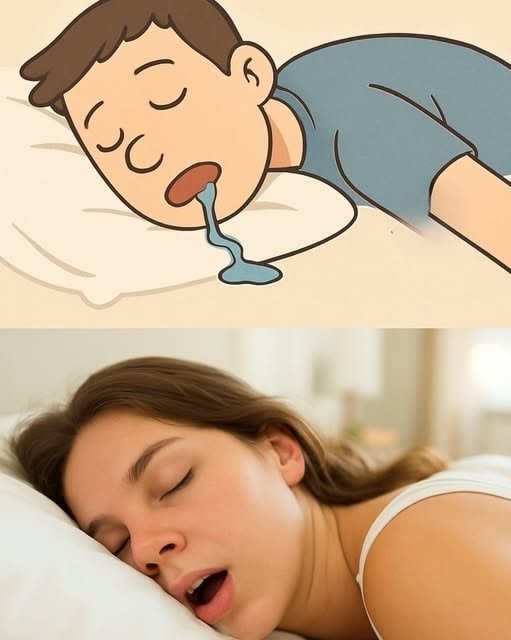
Many people wake up occasionally to find a small wet spot on the pillow. Drooling during sleep can feel embarrassing, but in reality, it is very common and usually harmless. For most, it simply reflects how the body relaxes during rest. Interestingly, sleep experts explain that nighttime drooling can sometimes give insights into the brain and nervous system, as well as oral and digestive health.
Understanding why drooling happens can help people see it as a natural part of sleep rather than something to be embarrassed about. In some cases, however, excessive drooling may signal underlying medical conditions. This guide explores why drooling occurs, what it may indicate, and how to manage it effectively.
Why Drooling Happens During Sleep
Saliva is constantly produced by glands in the mouth throughout the day and night. While awake, the brain automatically signals muscles to swallow saliva regularly. During sleep, the body enters a relaxed state, and swallowing becomes less frequent. When saliva builds up and the mouth is slightly open, it may escape, causing drooling.
This is particularly common during deep sleep or when sleeping in certain positions. Drooling is often a sign that the body is relaxed enough for muscles around the jaw to loosen—a natural and healthy process.
The Brain’s Role During Sleep
Sleep is not simply a passive state where the brain shuts down. Instead, the brain moves through multiple stages, each with varying levels of activity:
- Light Sleep – The body begins to relax, muscles loosen, and the heartbeat and breathing slow.
- Deep Sleep (Slow Wave Sleep) – Crucial for tissue repair, energy restoration, and immune system regulation. Muscle tone is at its lowest, increasing the likelihood of drooling.
- REM Sleep – Associated with dreaming and high brain activity. Although muscles are largely paralyzed during REM, the jaw may relax enough in some people to allow saliva to escape.
During these stages, drooling may reflect how deeply relaxed your body is, which is generally a positive sign for restorative sleep.