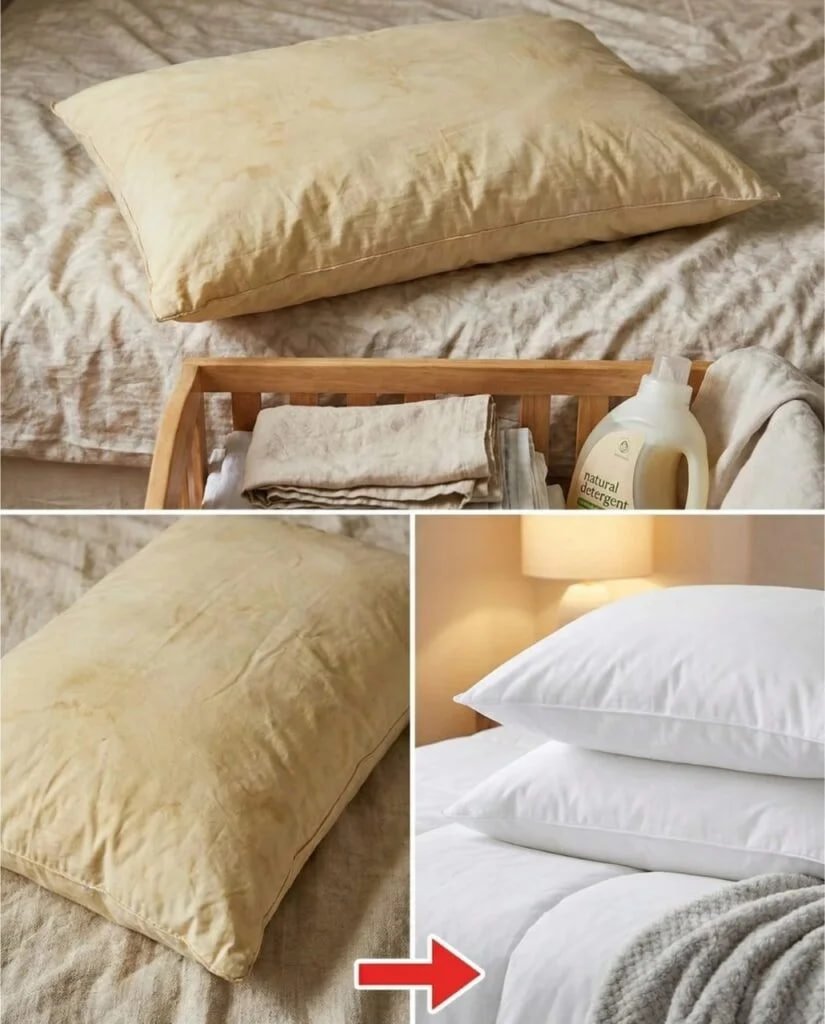
Over time, even the softest and most supportive pillows show signs of regular use – pale yellow stains, faded fabric, and lingering odors that no pillowcase can completely cover. Many people are unaware of how much sweat, natural oils, dust, and other particles accumulate on their pillows night after night, even when they appear clean on the surface.
These gradual deposits not only affect freshness, but can also affect comfort and air quality, especially for people with allergies or sensitivities. Regularly cleaning your pillows is important for ensuring a cleaner, healthier, and more inviting sleeping environment every night.
Related Articles
While pillowcases are typically washed frequently, the pillows themselves are often neglected. The first step to proper care is to check the manufacturer’s label for the safest way to clean your pillow. Fortunately, many traditional pillows—whether filled with synthetic fibers, cotton, feathers, or down—are machine washable.
Using warm water and a mild detergent usually produces effective results. Washing two pillows at a time helps balance the washing machine and improves the water and detergent circulation. A small amount of baking soda or white vinegar can help neutralize odors and naturally lighten the fabric.
Careful drying is just as important as washing. Moisture trapped in pillows can cause unpleasant odors or mold to develop over time, so pillows should be completely dry before using them. A low temperature or air-dry setting is usually ideal, although feather and down pillows may need a longer drying time to remove all moisture.
Using dryer balls—or clean tennis balls—during the drying cycle will help restore the shape and height of your pillow. This step prevents drowsiness and restores the soft support needed to keep your head and neck in a comfortable position throughout the night.