If you’ve ever woken yourself up with snoring, or had someone gently nudge you in the middle of the night because your breathing sounded louder than usual, you’re not alone. Millions of people struggle with snoring, and one of the most common questions sleep experts hear is surprisingly simple:
Does sleeping on your right side help or worsen snoring?
The answer is more interesting than most people expect. In many cases, side sleeping — whether right or left — can significantly reduce snoring compared to sleeping flat on your back. However, the exact side you choose may affect not only your breathing, but also digestion, acid reflux, circulation, and overall sleep quality.
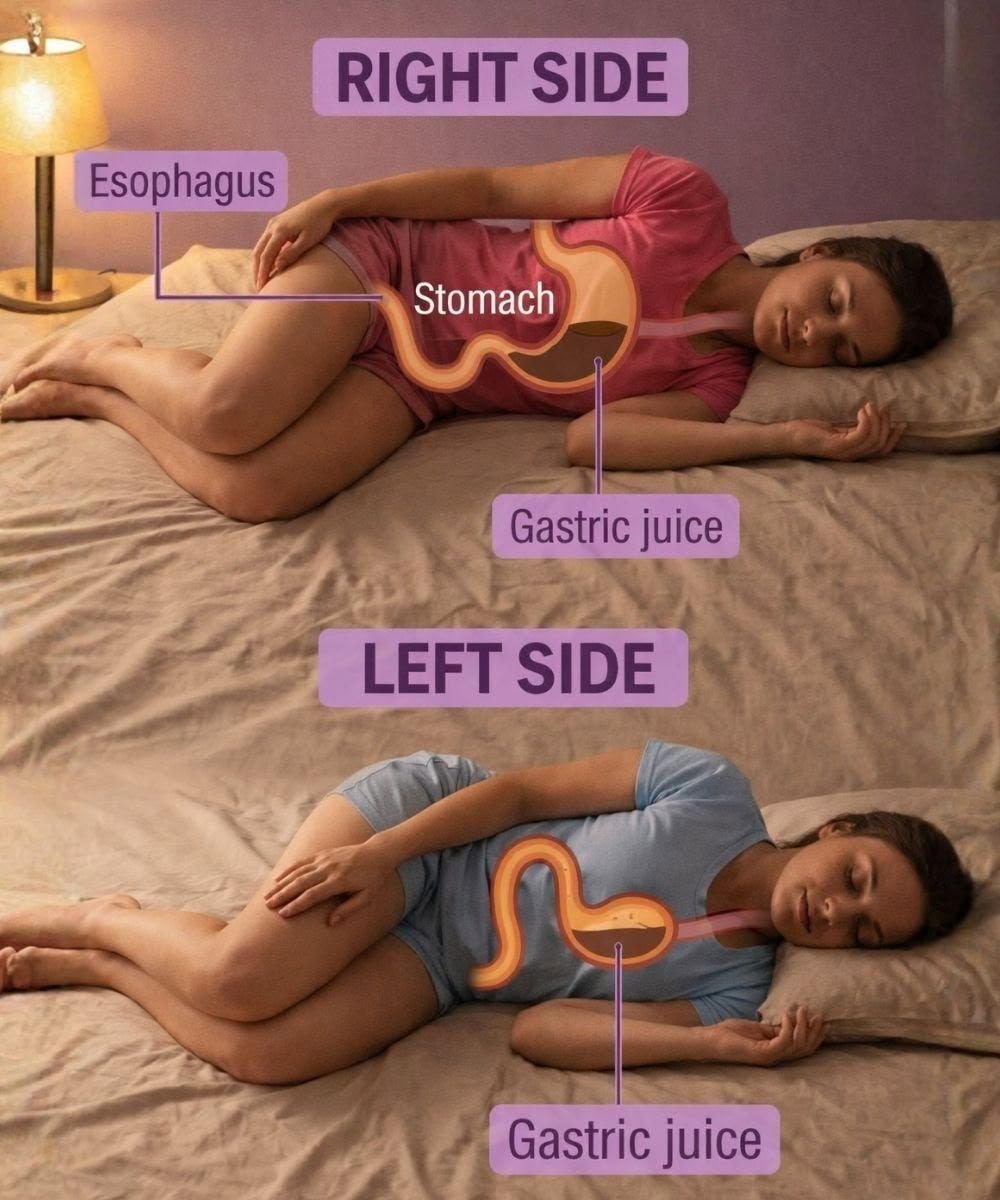
That’s why the image comparing right-side and left-side sleeping has become so popular online. It highlights how stomach acid and body positioning interact while you sleep. While the image simplifies a complex topic, there is some truth behind the idea that sleeping posture can influence nighttime breathing and comfort.
Understanding how sleep position affects your airway can help you rest more peacefully, reduce snoring naturally, and possibly improve your health at the same time.
Why Sleep Position Matters So Much
Many people think snoring happens only because someone is “sleeping too deeply.” In reality, snoring occurs when airflow becomes partially blocked while you breathe during sleep.
As air squeezes through a narrowed airway, tissues inside the throat vibrate. That vibration creates the familiar snoring sound.
Several things can narrow the airway:
- sleeping on your back
- nasal congestion
- excess throat tissue
- alcohol before bed
- obesity
- enlarged tonsils
- sleep apnea
- acid reflux
However, gravity also plays a major role.
When you sleep flat on your back, your:
- tongue
- soft palate
- throat muscles
all relax backward toward the airway. This creates more resistance during breathing.
Side sleeping changes that entire dynamic.
Instead of collapsing backward, the airway stays more open, making breathing smoother and quieter for many people.
Does Sleeping on the Right Side Reduce Snoring?
For many individuals, yes — sleeping on the right side may help reduce snoring compared to back sleeping.
Some sleep studies suggest that side sleeping generally improves airflow and reduces airway obstruction. Certain researchers have even found subtle differences between right-side and left-side sleeping.
Possible benefits of right-side sleeping include:
- slightly improved airway stability
- reduced tongue collapse
- easier breathing for some body types
- better comfort for habitual right-side sleepers
However, these benefits are often modest.
The biggest improvement usually comes simply from avoiding back sleeping altogether.
Why Side Sleeping Helps the Airway Stay Open
When you sleep on your side:
- gravity no longer pulls the tongue directly backward
- throat tissues compress less
- breathing passages stay more open
- airflow becomes steadier
This reduces tissue vibration and decreases snoring intensity.
Think of it like a partially pinched straw.
Back sleeping “pinches” the airway more easily, while side sleeping helps keep the breathing passage more open and stable.