Understanding the Spotted Wing Drosophila
The spotted wing drosophila is a tiny vinegar fly originally native to parts of Asia.
Over the past several decades, it has spread across North America, Europe, and other regions.
Its success comes from a unique adaptation.
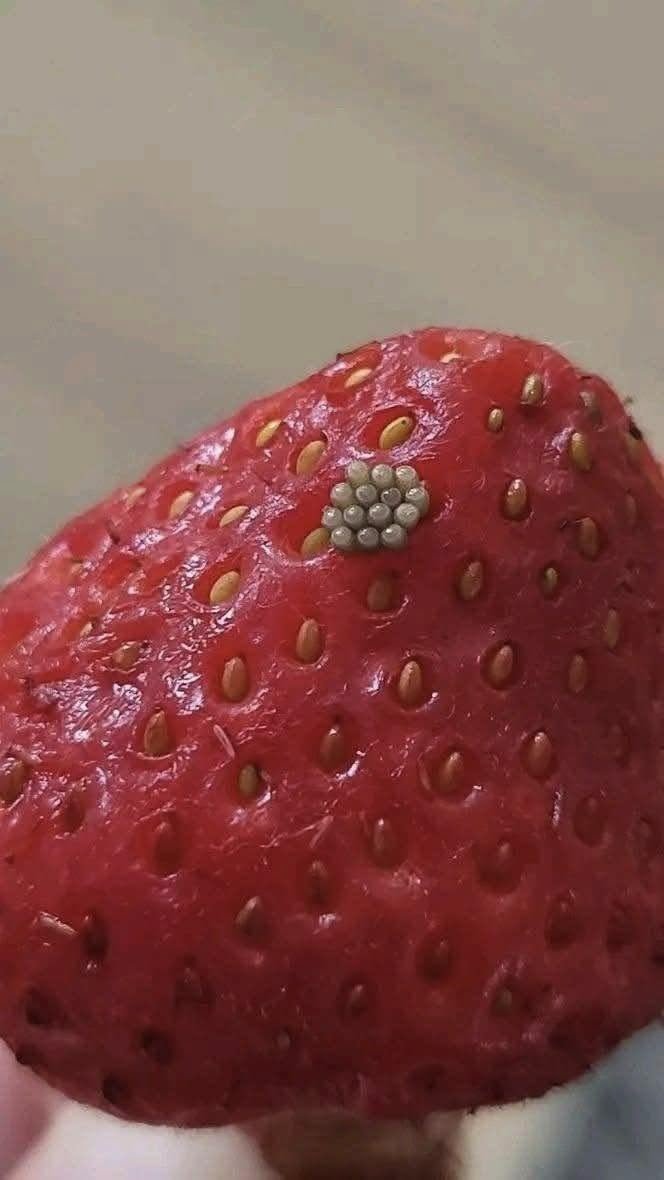
Unlike ordinary fruit flies that prefer decaying fruit, spotted wing drosophila can lay eggs in fruit before harvest.
This allows larvae to develop while the fruit remains on the plant.
By the time berries reach grocery stores, larvae may already be present inside some fruit.
This doesn’t necessarily indicate poor farming practices.
Even carefully managed farms encounter these insects.
Why Salt Water Makes the Larvae Appear
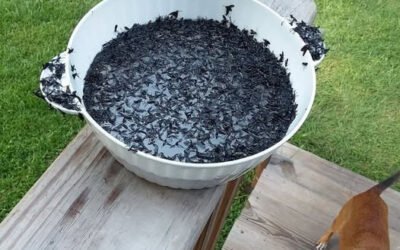
Many people discover larvae only after soaking strawberries in salt water.
This often creates the mistaken impression that the salt somehow generates the creatures.
It doesn’t.
The larvae were already present.
The salt simply encourages them to emerge.
The Science Behind the Process
Salt water creates what’s known as a hypertonic environment.
In simple terms, the water outside the larvae contains a higher concentration of salt than the fluids inside their bodies.
This causes water movement through osmosis.
As moisture leaves the larvae, they experience mild stress and irritation.
In response, they often move toward the fruit’s surface and exit into the surrounding water.
Without the salt soak, many would remain hidden and unnoticed.
The salt doesn’t create them.
It reveals them.
Why Fresh Water Usually Doesn’t Work
Many people wash strawberries under running water without seeing anything unusual.
That’s because plain water doesn’t create the same osmotic pressure.
Fresh water removes:
- Dirt
- Dust
- Surface debris
- Some pesticide residues
However, it doesn’t encourage larvae to leave the fruit as effectively as salt water.
This explains why people may eat strawberries for years without ever noticing larvae, then suddenly discover them during a salt-water experiment.
Are Strawberries with Larvae Safe to Eat?
This is the question most people care about.
The answer is generally yes.
Food safety experts widely agree that accidentally consuming fruit fly larvae poses little to no health risk for healthy individuals.
The larvae:
- Do not infect humans
- Are not parasitic
- Cannot survive in the digestive tract
- Are non-toxic
- Are digested normally
Your stomach acid breaks them down just like any other organic material.
Many people have unknowingly consumed small numbers of larvae throughout their lives without experiencing any health problems.
While the idea may be unpleasant, the actual health risk is extremely low.
Why Larvae Do Not Mean the Fruit Is Dirty
One common misconception is that larvae indicate poor hygiene.
In reality, larvae can appear even in carefully grown fruit.
Their presence reflects biological activity occurring before harvest.
A berry containing larvae may have:
- Been grown organically
- Been grown conventionally
- Been harvested properly
- Passed quality inspections
- Appeared perfectly fresh
The larvae developed while the fruit was growing.
This differs significantly from contamination caused by poor handling or improper storage.