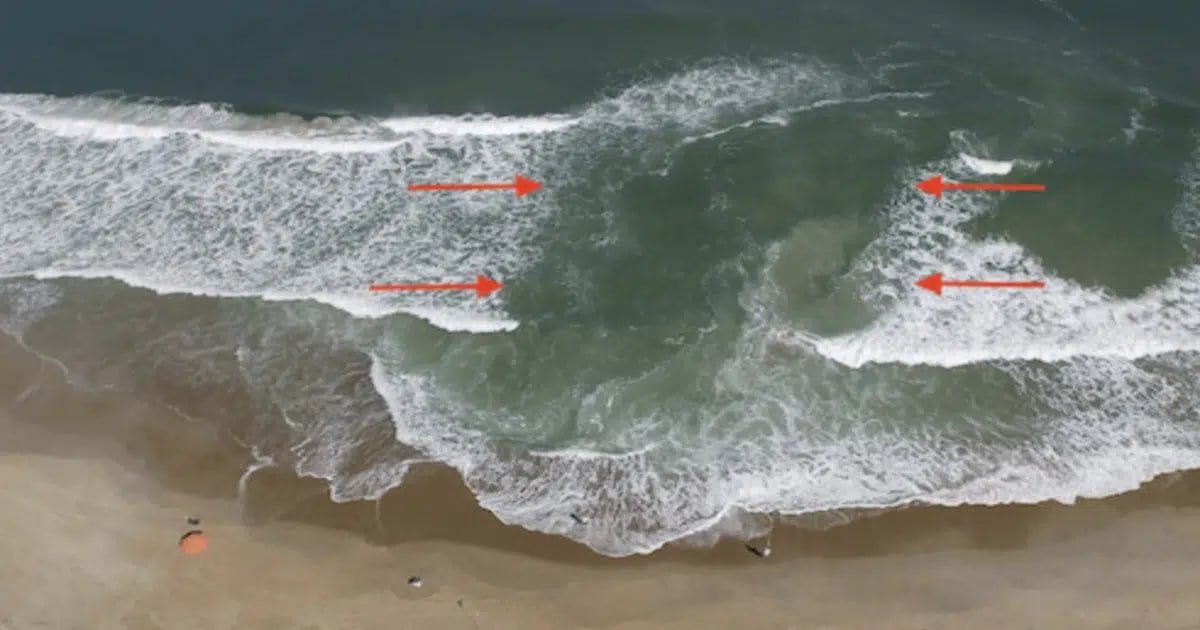
Apparently, this phenomenon is called a rip current. Rip currents are powerful, narrow channels of fast-moving water that are prevalent along coasts all around the world. They can form at any beach with breaking waves and can quickly pull swimmers out to sea. Understanding when and how rip currents occur is vital for anyone who frequents the beach. They usually form when waves break near the shoreline. The water piles up between the breaking waves and the beach. This water needs to find a way back to the ocean. It can concentrate in narrow channels through the surf zone.

What’s truly deceptive about rip currents is how calm they appear. A patch of still water between more turbulent waves can look like a safe haven but is often the opposite. Recognizing a rip current is the first step in avoiding them. Look for areas where waves aren’t breaking directly. Check where foam or debris seems to be moving steadily seaward. Also, observe where a different color in the ocean appears amid surrounding waves
If you ever find yourself caught in a rip current, one of the best things you can do is not fight it. Swimming straight back to shore against a rip current can be tiring. It can also be deadly, even for the strongest of swimmers. Instead, the best thing to do is to swim parallel to the shore to get out of the narrow channel of water that is moving. Once you feel yourself not feeling the pull of the current, you can swim back to shore at an angle that is away from the current.
Rip currents are more common than you might think. In the United States, for instance, lifeguards rescue tens of thousands of people from rip currents each year. They’re particularly prevalent at beaches with stronger and more frequent waves, such as those on the East and West Coasts of the U.S. However, no coastline with breaking waves is immune.