How to Tell the Difference Between a Nasal Inhaler and a Vape
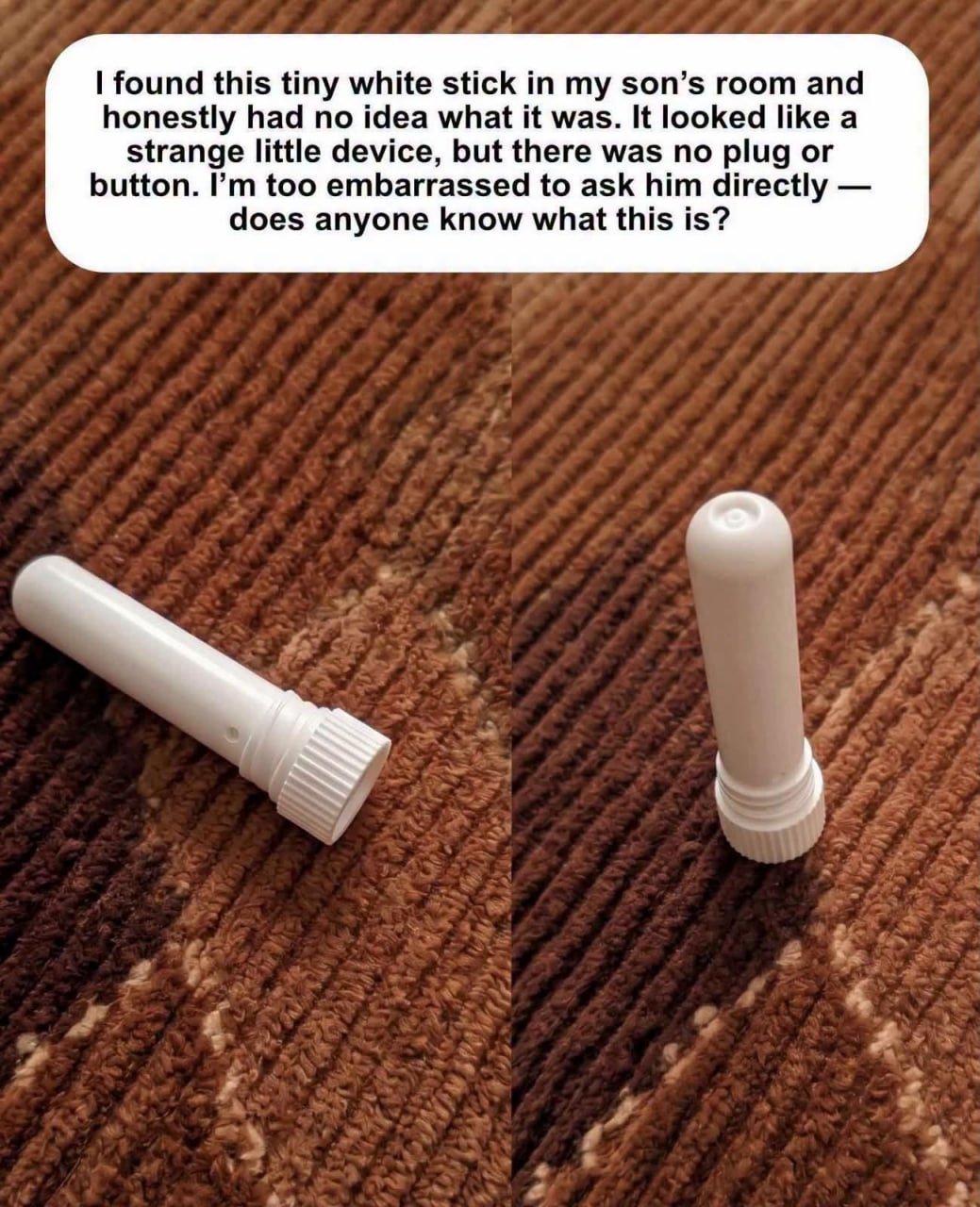
One reason parents become concerned is that both products are often small and cylindrical.
Fortunately, several features make identification much easier.
Nasal Inhaler
- Two small inhalation openings
- Strong mint or eucalyptus smell
- No battery
- No charging port
- No indicator lights
- Lightweight plastic construction
Vape Device
- Mouthpiece for inhaling vapor
- Rechargeable battery
- Charging port
- Heating element
- Electronic components
- Sometimes LED lights
If you’re uncertain, avoid guessing.
Simply ask.
Most misunderstandings disappear after one calm conversation.
The Parenting Lesson Hidden Inside the Story
Finding that little inhaler reminded me of something much bigger than cold remedies.
Our minds naturally fill in missing information.
When we don’t know something, we often invent explanations.
Unfortunately, those explanations usually lean toward fear rather than facts.
Children notice this.
They learn whether home is a place where questions are welcomed—or accusations arrive first.
Imagine these two conversations.
Conversation One
“What is this? Are you hiding something from me?”
Immediately, defenses go up.
Conversation Two
“I found this while cleaning. I wasn’t familiar with it. Can you tell me what it is?”
Now curiosity replaces conflict.
Trust grows.
Communication becomes easier.
The object never mattered nearly as much as the conversation.
Curiosity Creates Better Conversations
Many parenting experts encourage replacing assumptions with questions.
Children, teenagers, and even adults respond better when they feel respected.
Instead of assuming the worst, consider asking:
- “Can you explain what this is?”
- “Where did you get it?”
- “What do you use it for?”
- “I’ve never seen one before.”
Simple questions often lead to honest answers.
The goal isn’t catching someone doing something wrong.
The goal is staying connected.
Other Everyday Items Parents Commonly Misidentify
This experience reminded me how many ordinary products can appear suspicious.
Some examples include:
Essential Oil Rollers
These resemble small perfume bottles but contain diluted essential oils.
Lip Balm Tubes
Certain designs look remarkably similar to vape cartridges.
USB Drives
Some modern flash drives are tiny and unusual.
Portable Chargers
Battery packs come in countless shapes and sizes.
Aromatherapy Devices
Many resemble electronic gadgets even though they simply contain scented oils.
As products become more compact, confusion becomes more common.
Are Personal Nasal Inhalers Safe?
For most healthy adults and older children, personal nasal inhalers are generally considered safe when used according to their directions.
However, a few guidelines are important.
Use Them Occasionally
They work best for temporary congestion.
Using any inhaled product constantly may irritate sensitive nasal tissue.
Keep Them Clean
Replace the cap after use to reduce contamination.
Don’t Share
Like toothbrushes or lip balm, inhalers should remain personal items.
Follow Age Recommendations
Some products aren’t intended for very young children because strong menthol can be overwhelming.
Always read the package instructions.
Can You Become Addicted?
Menthol itself doesn’t create nicotine-style addiction.
However, some people grow accustomed to the refreshing feeling.
This is more of a habit than a chemical dependence.
If someone constantly reaches for an inhaler every few minutes, it may be worth discussing whether underlying allergies or chronic congestion should be evaluated by a healthcare professional.