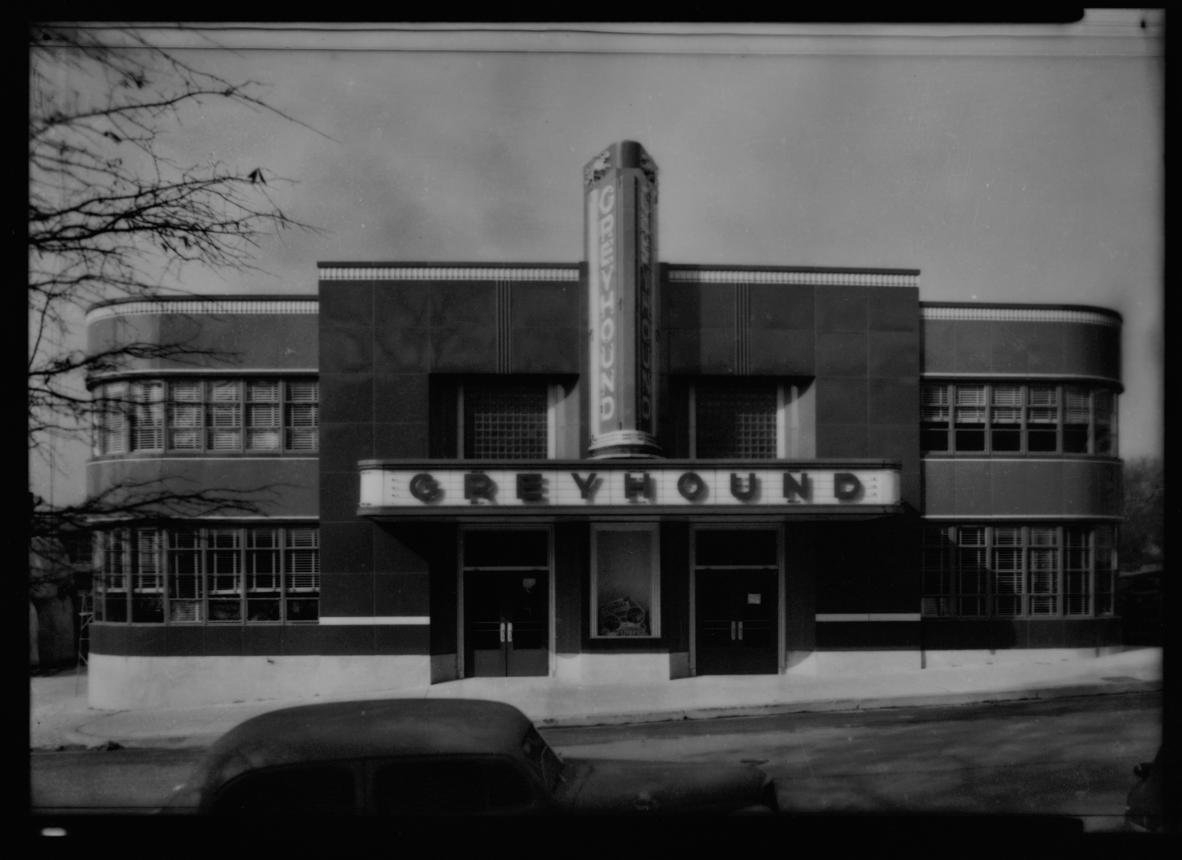
What happened to it?
After Greyhound moved to newer facilities, the building avoided demolition—a fate that claimed many historic bus stations.
It was carefully restored and adapted for new use as professional offices. For many years it housed the architectural firm of Robert Parker Adams, whose restoration preserved much of the building's distinctive Art Deco appearance. The restoration has often been cited as an excellent example of adaptive reuse.
Why it's significant

The Jackson Greyhound Station is considered:
One of Mississippi's finest surviving Art Deco/Streamline Moderne buildings.
An important reminder of the era when bus transportation connected cities long before interstate highways and widespread commercial air travel.
A successful preservation project demonstrating how historic transportation buildings can find new life.
Its vivid blue exterior makes it especially distinctive among surviving Greyhound terminals, many of which were originally finished in cream, silver, or porcelain enamel.
If you're collecting Mississippi postcards and historic photographs, this station is one of the state's architectural landmarks from the late 1930s and remains a favorite subject for historians and Art Deco enthusiasts.