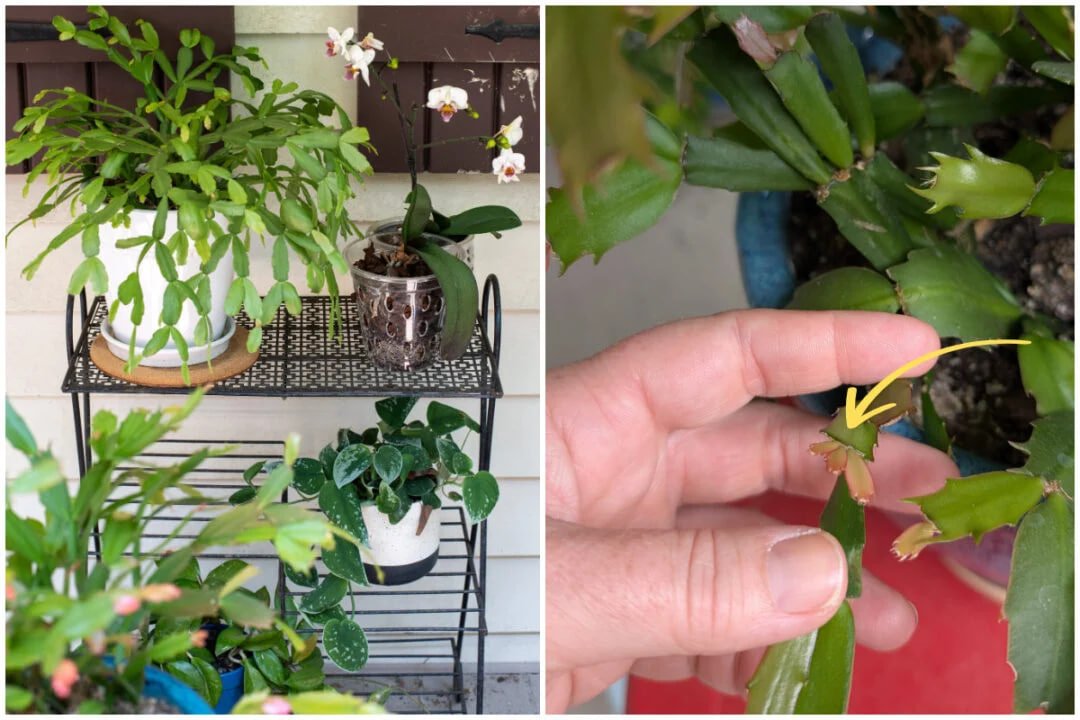
You don’t want it sitting where it will get blasted by the sun.
It needs to have bright, indirect light. I put my Schlumbergera out on my front porch, but tucked it back in the shade. Here, they go nuts putting out tons of new growth all summer long.
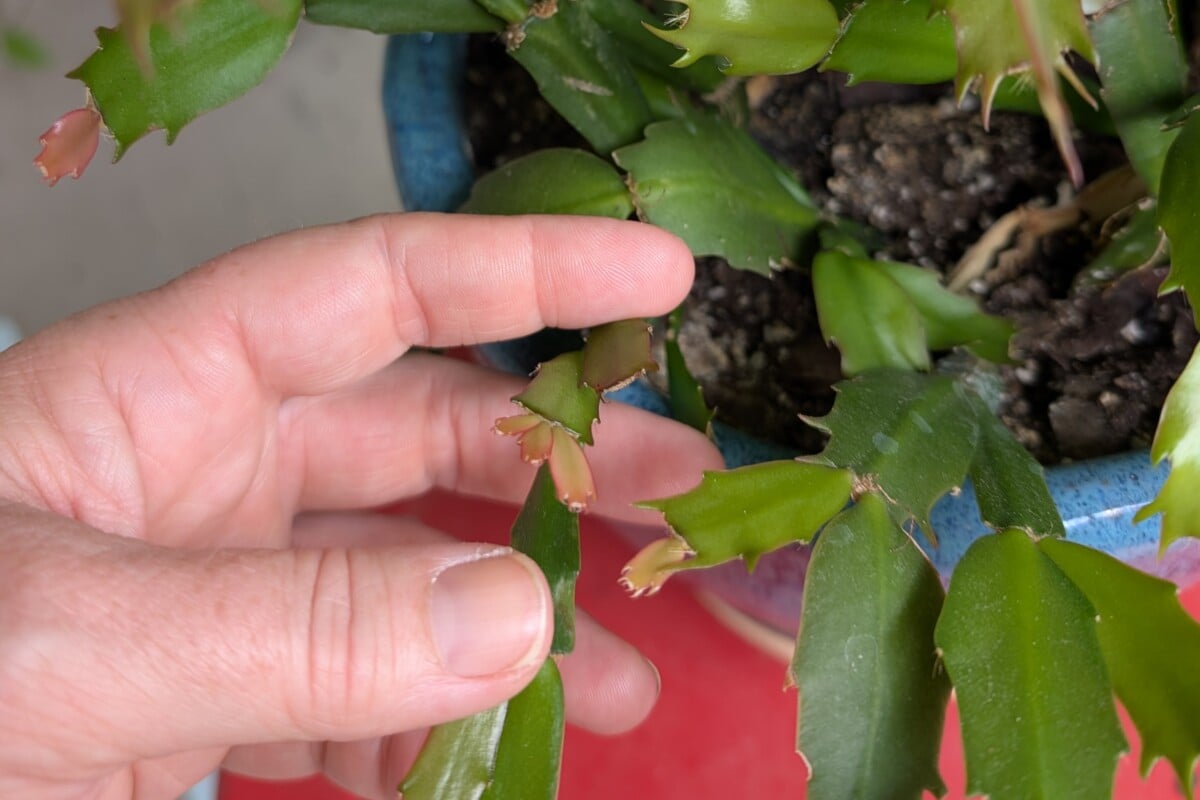
Treat your Christmas cactus like your pale-skinned friend who burns easily. (I am that friend.) They need to be outside, but in the shade.
Even if you’ve only got a week or two left, that consistent, strong light will do wonders for creating lots of blooms.
Keep Watering Consistently
Christmas cacti do not like wet feet. But if you’ve got your plant outdoors, it will likely dry out much faster than it would indoors. Plus, all that growing requires a lot of water. Check your cactus frequently by sticking your finger in the soil. Water it when the top inch of soil is dry and give it a thorough soaking.
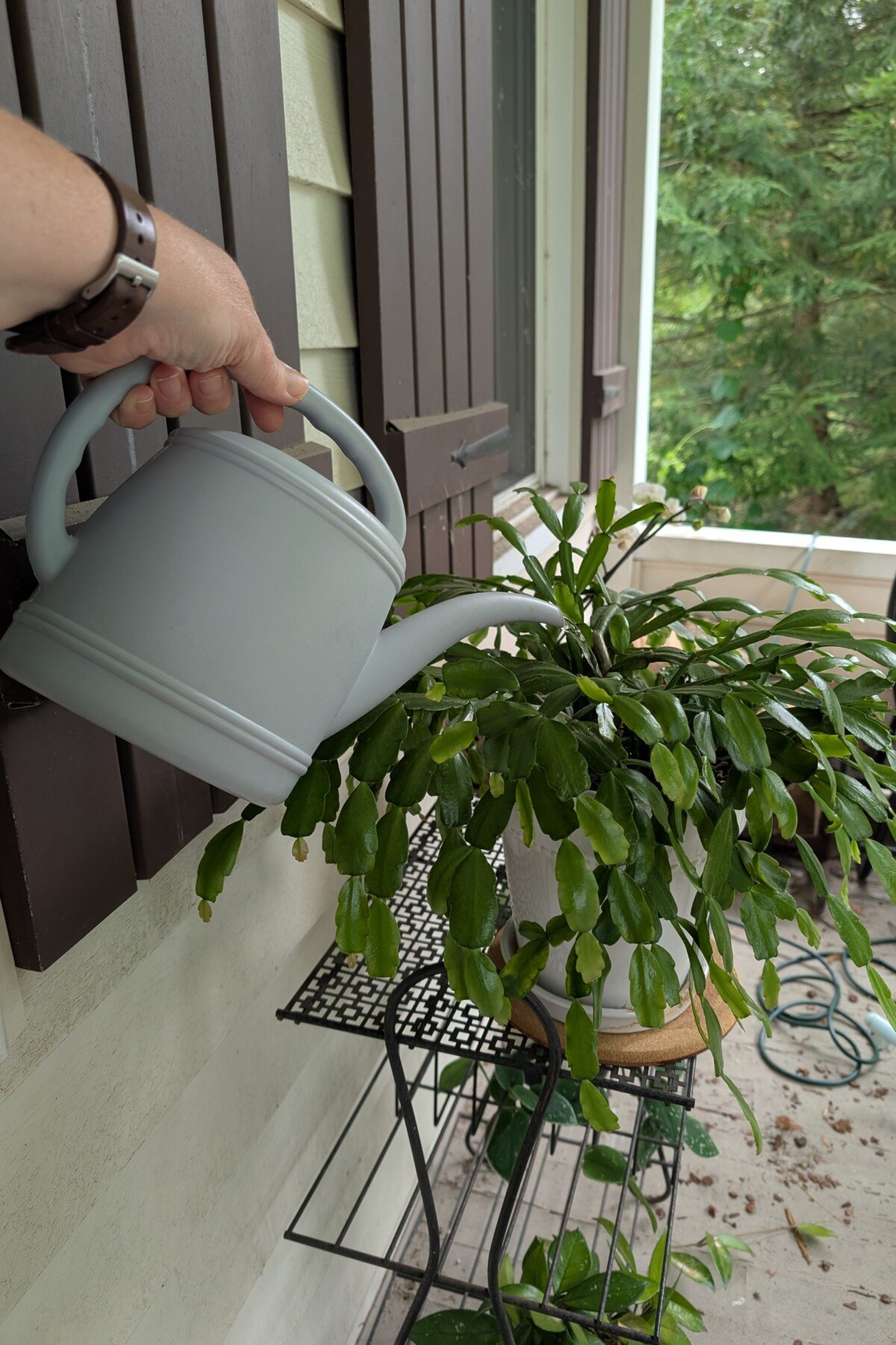
Let your plant soak up everything and drain for about fifteen minutes, then tip out any standing water.
Switch to a Fertilizer Meant for Blooms
During the active growing period of early spring through summer, I opt for a fertilizer with a higher nitrogen content. But when August rolls around, I reach for my secret weapon. (It’s this, this is my secret weapon. You can read more about it here.)
Don’t let the name fool you, I know it says African violet food. It works great for Christmas cactus, too.
It’s high in phosphorus and potassium, both important nutrients for blossom development.
I use this fertilizer at half strength nearly every week during August.
Do This at the End of August
At the end of the month, we’re going to make two abrupt changes that will ensure your plant begins bloom prepping.
Check For Stowaways
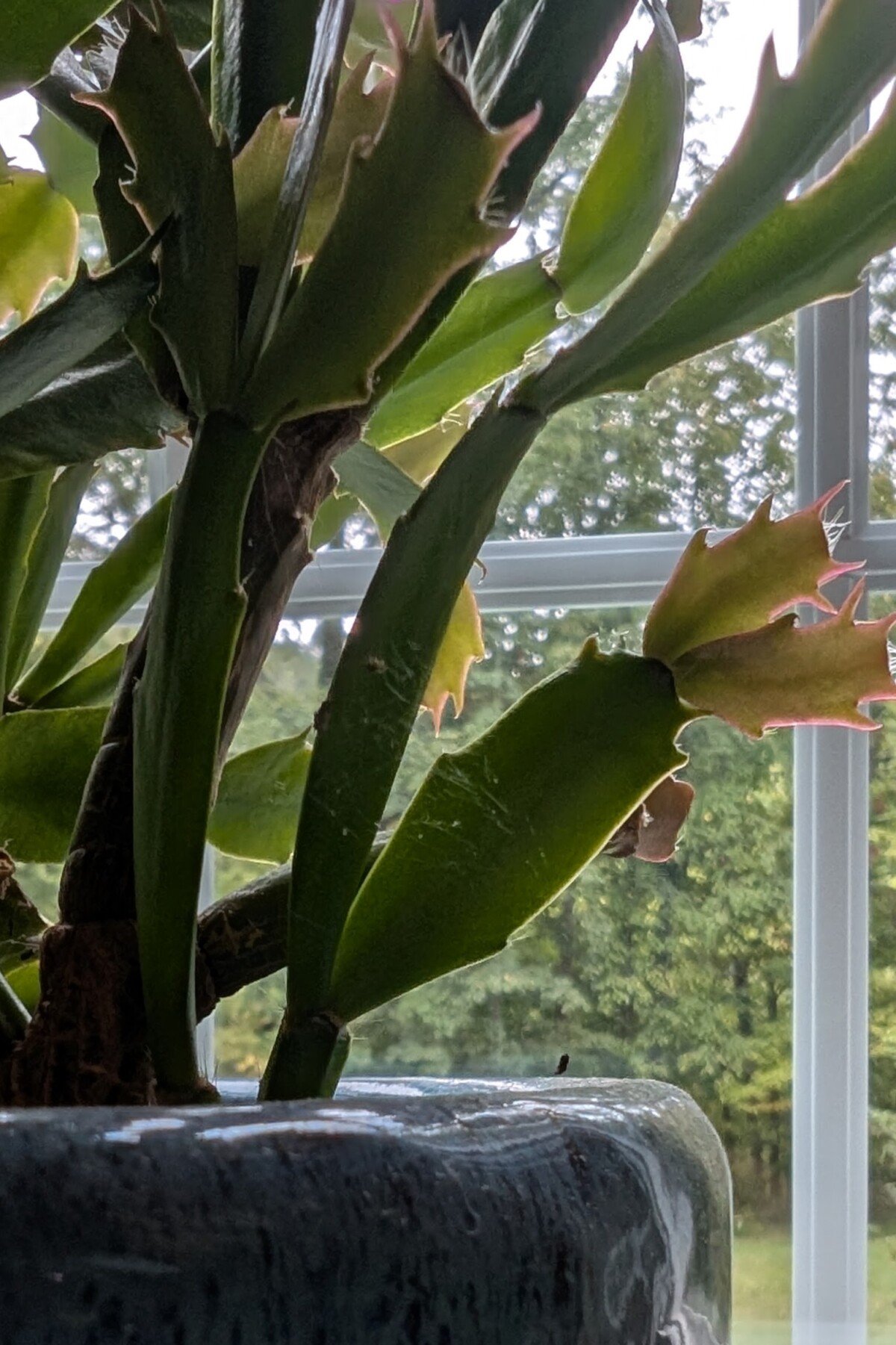
About a week before the end of the month, start checking your plant for signs of pests. Christmas cacti are one of those rare plants that don’t generally attract many pests. But with your plant sitting outside for most of the summer, you don’t want to take the chance that you are bringing in more than just a Christmas cactus.
Check the soil, look at the crown and don’t forget to look under cladodes. Be gentle, as the segments snap easily.